Example Of Adverb Of Time ~ Adverbs of Time and Adverbs of Place Lesson Plans - Pdl-talkchile.cl. Vocabulary for esl learners and teachers. Yesterday, the day before, ago, last week/month/year. This article provides plenty of examples. Adverbs of time in english grammar. Many adverbs of time are the same as adverbs of frequency.
Adverbs that tell us when are usually placed at the end of the sentence. Some other how often adverbs express the exact number of times an action happens and are usually placed at the end of the sentence: It's used at the end of a sentence, either on its own when. I said i could wait for her as long as she wanted. Most important adverbs of time list
Adverbs of Frequency from www.sliderbase.com 2.a complete list of adverbs of time. I said i could wait for her as long as she wanted. Don't forget to check out the. 'yet' is an adverb of time which tells us that something hasn't happened, but it's expected to happen. Learn list of 50+ popular time adverbs in english. Adverbs of time and frequency. Review adverbs expressing time, aspect, duration, and frequency, and their compatibility with each tense. Adverbs of time tell us when an action happened.
Adverbs of time, adverbs of manner, adverbs of degree, adverbs of place, adverbs of frequency.
An adverb clause of time shows when something happens. Specify the timing of an action or activity. Goldilocks went to the bears' houseyesterday. Early, late, since, ago, formerly, before, after, now, soon, immediately, later, afterwards, yet, first, last, lately, still, just, daily, today, tomorrow. 1.what are adverbs of time in english? Adverbs of time mainly modify verbs and tell us when something happens. Adverbs of time and frequency. However, manner adverbs, frequency adverbs, time adverbs, degree adverbs and place adverbs are the most commonly used. Adverbs of time tell us when an action happened, but also for how long, and how often. Yesterday, the day before, ago, last week/month/year. An adverb of time is an adverb that describes when the action of a verb is carried out. Adverbs of time tell us when something happens. Adverbial phrase is a group of words showing when, how long or how often something happens.
What is an adverb of time? An adverb of time is an adverb that describes when the action of a verb is carried out. Many adverbs of time are the same as adverbs of frequency. Adverbs that qualify or change the meaning of a sentence by telling us when things happen are called adverbs of time. Some examples of adverbs of time are:
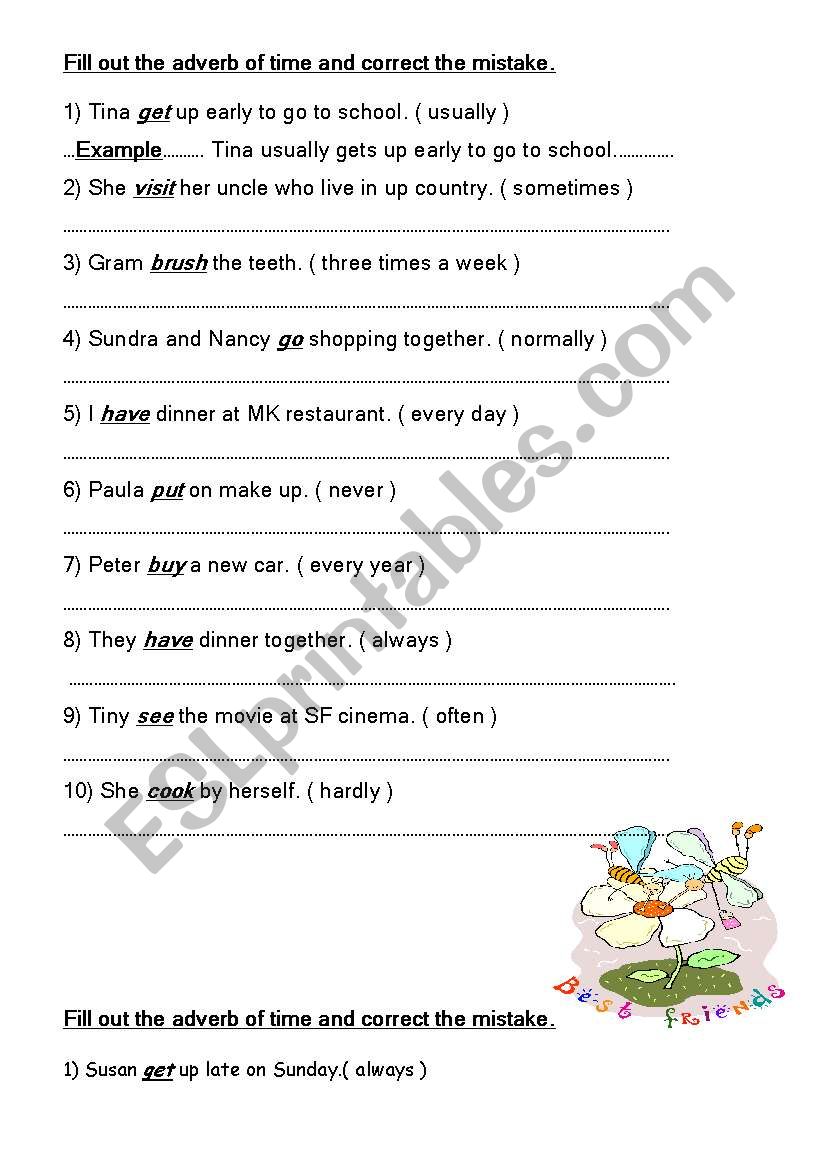
English worksheets: Adverb of time from www.eslprintables.com These adverbs are used to show the duration or timing of the action that is happening/had happened/will happen. After already during finally just last later next now recently soon then tomorrow when while and yesterday. Adverbs of time, adverbs of manner, adverbs of degree, adverbs of place, adverbs of frequency. Adverbs of time modify the meaning of a sentence by telling us when, for how long, an action happens. To talk about the present: Learn list of 50+ popular time adverbs in english. The word which expresses time and tell us when something happens is called adverb of time. Adverbs of time and frequency.
These adverbs can describe how often, how long or when something takes place.
In order to avoid complexity, if any situation is not common or important, we often need to. An adverb clause of time shows when something happens. Learn english grammar with this video about adverbs of time. Goldilocks went to the bears' house yesterday. An adverb of time is an adverb that describes when the action of a verb is carried out. Some examples of adverbs of time are: Time adverbs can tell us about when an action happens, (now, soon, etc.) or how frequently an action happens (usually, always, etc.) Adverbs of time in english grammar. I'm going to tidy my roomtomorrow. Today, yesterday, later, now, last year. In this chapter the adverbs of time will be explained. Adverbs of time and frequency. In this study guide, you will learn about these adverbs through real examples.
'yet' is an adverb of time which tells us that something hasn't happened, but it's expected to happen. Note that all adverb clauses are subordinate clauses. Adverbs of time answer the question when? The bare time adverbs in (28) thus specify that the past time of abdel's departure is contained within the time designated by last year/june 10, 2001. Adverb examples with example sentences to learn adverbs of time, place, manner, frequency, and degree.
Adverb Examples | List Of Adverbs With Example Sentences | Games4esl from h8y4w3m9.rocketcdn.me Descriptive examples, helpful explanations and these adverbs of time are often used: Review adverbs expressing time, aspect, duration, and frequency, and their compatibility with each tense. It's used at the end of a sentence, either on its own when. It tells us when an action happened besides how long, how often. Adverbs of time describe when something happens. I'm going to tidy my room tomorrow. Now, today, daily, early and soon are all adverbs of time. Goldilocks went to the bears' houseyesterday.
Note that all adverb clauses are subordinate clauses.
Review adverbs expressing time, aspect, duration, and frequency, and their compatibility with each tense. What is an adverb of time? Examples of adverbs of time: Many adverbs of time are the same as adverbs of frequency. Learn english grammar with this video about adverbs of time. Definite adverbs of frequency | yearly, once a week, 5 times a week, every month. An adverb of time is an adverb that describes when the action of a verb is carried out. A course book and reference guide adverbs of time (pg 249) by ron cowan gohar english teacher's notes 3 adverbs of time. Adverbs of time describe when something happens. He came home before dark. Time adverbs can tell us about when an action happens, (now, soon, etc.) or how frequently an action happens (usually, always, etc.) Goldilocks went to the bears' houseyesterday. The teacher's grammar of english with answers: